

Conferences are under pressure. Not the dramatic, headline kind – the slow-burn kind that comes from rising expectations, shrinking attention spans, and audiences who’ve seen it all before. They don’t just want “a day of sessions” anymore. They want meaning, momentum, and moments they’ll actually remember.
And while organisers are busy solving for content, speakers, tech, and timing, one decision is still doing more heavy lifting than most want to admit: the venue.
For example, at Rugby School – a new addition to Lime Venue Portfolio – you don’t just arrive at a conference – you step into a place that already knows how to hold attention. As the birthplace of rugby, heritage and sport form the background and set the tone. It slows things down just enough to make people pay attention in a different way. That shift matters more than any opening keynote slide ever will.
Here are five things to consider…

1. First impressions aren't decoration – they're strategy
Before the first speaker speaks, the venue has already made its case.
It has told delegates whether this is a standard conference… or something with intent behind it. Whether it’s been assembled or considered.
A space with identity – cultural, historic, or sporting – doesn’t just “host” an event. It changes how people behave inside it. Confidence rises. Attention sharpens. People arrive a little more switched on than they expected to be. For instance, events get an immediate lift the moment you arrive at The Conduit – a design-led private members’ club in London’s buzzing Covent Garden where the energy is built in from the start, setting a confident, contemporary tone.
And that’s not branding fluff. That’s behavioural design, whether you planned it or not.
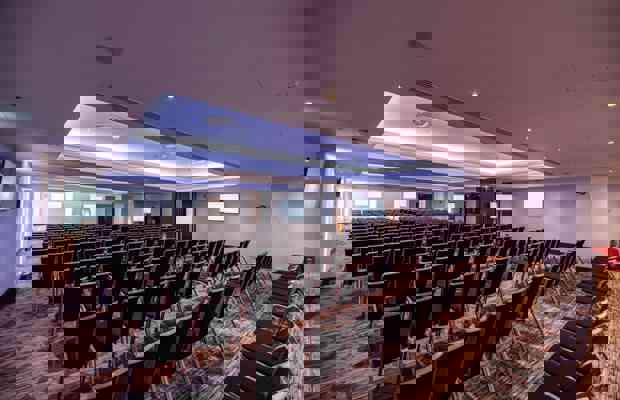
2. Engagement isn't added – it's engineered
Keeping people engaged is the modern conference’s hardest currency.
The best venues don’t fight that reality – they design around it.
Take Allianz Stadium, Twickenham, aka as the Home of England Rugby. A plenary session there isn’t just a room with chairs – it’s a place where delegates can literally step behind the scenes, walk the tunnel, and stand where elite sport plays out under pressure. It’s a moment they’ll want to remember and capture. That shift – from observer to participant – changes the energy in the room.
Suddenly, people aren’t just attending. They’re inside the story.
And once that happens, you’ve already won more engagement than most agendas manage in a full morning.

3. Networking shouldn't feel like forced fun
Let’s be honest – structured networking can feel like speed-dating with lanyards. The environments that fix this don’t “programme” better conversations. They remove the awkwardness that prevents them.
At Aintree Racecourse, for instance, the shared rhythm of the venue does some of the work for you. The atmosphere carries its own momentum. People have something to react to together. That shared context – excitement, movement, unpredictability – breaks down barriers faster than any icebreaker ever will.
Connection doesn’t need to be engineered. It needs to be unlocked.
4. Sustainability isn't a layer – it's part of the design
This is where expectations are shifting fastest – and rightly so.
Sustainability in events is no longer about visible gestures. It’s about systems thinking: less waste, smarter sourcing, lower carbon, better outcomes, and better events.
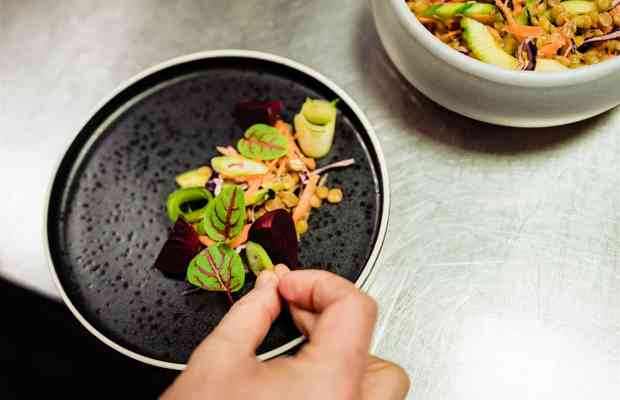
And food is right at the centre of that shift. Across the industry, plant-based menus are no longer a compromise – they’re becoming the standard for good reason. Lower emissions. Reduced waste. More local sourcing. And crucially, better food that doesn’t feel like an apology for its own sustainability.
This is where the direction of travel is clear: the best conferences don’t just feed people – they rethink how they feed people.

5. The smarter choice behind the scenes
This is where working with a portfolio like Lime Venue Portfolio changes the equation.
Not simply because it offers over 60 venues and The Hub – a centralised team of specialists that certainly takes the friction out of finding the right space – but because it creates a sharper alignment between purpose and place.
From heritage-led settings like Rugby School, to iconic sporting stages such as Allianz Stadium, and experience-rich environments like Aintree Racecourse, the value isn’t in uniformity. It’s fit.
And underpinning that is something more important than variety: intent.
Lime Venue Portfolio positions itself not just as a venue collection, but as a cheerleader for better events – supporting organisers to think differently about what conferences can be, and challenging the industry to raise its baseline.
That shows up in sustainability commitments, too: normalising plant-based catering as default thinking, reducing food miles, cutting waste, and proving that responsible choices can also be the most commercially and experientially intelligent ones.
The truth is, a conference is never just its agenda. It’s the feeling of walking into the room. It’s the food, the atmosphere, the small moments in between. And it’s what still lingers in people’s minds long after they’re back at their desks.
Get the venue right, and you don’t just improve the event. You change what the event is capable of.


